Blog Article
Mastering AI: Your Guide to Choosing & Using AI Prompts & Tools
Unlock your creative potential and optimize your workflow with this comprehensive AI prompts guide. Learn how to choose the best AI tools and master prompt engineering for effective results in 2026.
Mastering AI: Your Guide to Choosing & Using AI Prompts & Tools
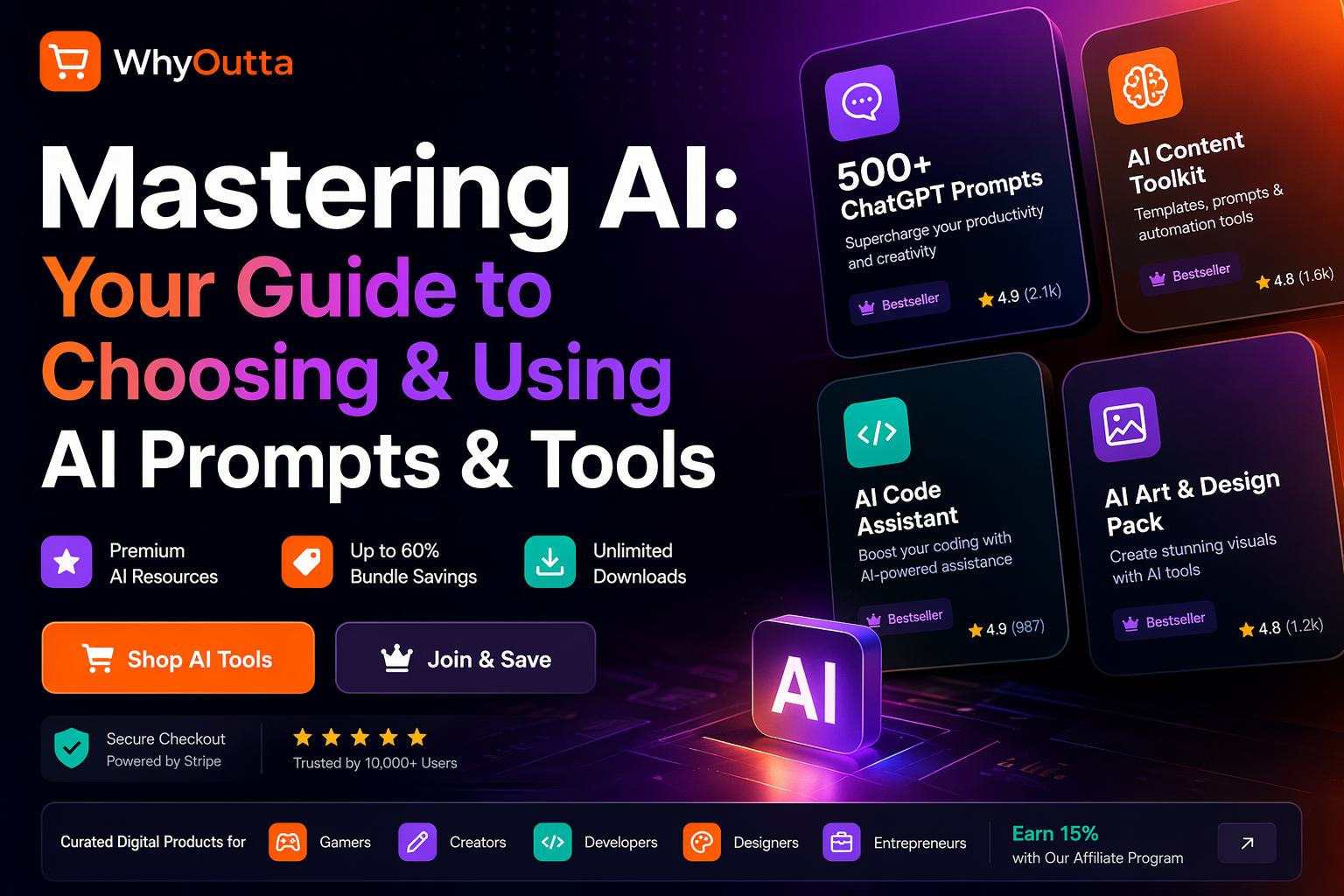
In 2026, Artificial Intelligence is no longer a futuristic concept; it's an indispensable co-pilot for professionals and enthusiasts across every industry. From generating compelling marketing copy and intricate code to designing stunning graphics and composing original music, the power of AI lies in its ability to augment human creativity and efficiency. However, harnessing this power effectively hinges on one crucial skill: mastering the art of AI prompt engineering. This comprehensive AI prompts guide will equip you with the knowledge to navigate the rapidly evolving landscape of AI tools and command them with precision.
The sheer volume of available AI tools and the nuanced language required to communicate with them can be overwhelming. Many struggle to get the desired output, feeling as though their AI assistant just "doesn't understand." This guide aims to bridge that gap, transforming you from a casual user into a proficient AI orchestrator. We’ll delve into understanding what makes a powerful prompt, how to select the right AI tools for your specific needs, and practical strategies to integrate AI seamlessly into your daily workflow, ensuring you're always getting the most out of your digital companions.
Whether you're a gamer looking to optimize strategies, a creator seeking new artistic avenues, a developer streamlining code, or an entrepreneur driving innovation, this article will show you how to leverage AI to its fullest. By the end, you'll not only understand how to use AI tools more effectively but also how to choose the ones that genuinely elevate your projects. Get ready to unlock new levels of productivity and creativity with the right approach to AI prompts and tools.
Understanding the Power of AI Prompts: Unlocking Creative Potential
At its core, an AI prompt is a specific instruction or query given to an artificial intelligence model to generate a desired output. Think of it as a conversation starter with a highly intelligent, albeit literal, assistant. The quality and clarity of your prompt directly dictate the relevance, accuracy, and creativity of the AI's response. In a world increasingly driven by digital innovation, mastering this communication is paramount.
The power of AI prompts extends far beyond simple queries. They are the keys that unlock an AI's vast potential, allowing it to act as a brainstorming partner, a tireless researcher, a code assistant, or even a digital artist. A well-crafted prompt can transform a vague idea into a concrete output, saving countless hours and sparking new insights. It's the difference between asking "Write a story" and "Write a suspenseful 500-word short story about a detective in a foggy 1940s London, who uncovers a secret society hidden beneath Big Ben, with a twist ending."
Beyond text generation, AI prompts are vital for various AI applications. Image generation models respond to descriptive prompts that specify styles, subjects, and moods. Code generation AIs require precise instructions on functionality, programming language, and desired outcomes. Even in gaming, AI can generate scenarios, character dialogues, or environmental textures based on specific prompts. Understanding this versatility is the first step in leveraging AI as a multi-faceted tool for diverse tasks.
Choosing the Right AI Tools: Key Considerations
With an explosion of AI platforms, selecting the appropriate tool for your needs can feel daunting. The "best" AI tool isn't universal; it's the one that aligns perfectly with your goals, budget, and existing workflow. Before diving in, consider the specific tasks you frequently perform and where AI could genuinely offer a competitive edge. Do you need robust text generation, advanced image manipulation, or specialized coding assistance?
Versatility and Integration
A crucial factor is the tool's versatility and how seamlessly it integrates with your current software ecosystem. Some AI tools excel at niche tasks, while others offer broad capabilities. For instance, if you're a content creator, an AI writing assistant that can also generate social media captions and blog outlines might be more valuable than a highly specialized AI for just academic writing. Look for APIs or direct integrations with popular platforms like design software, project management tools, or CRM systems. A tool that can plug into your existing workflow will save time and reduce friction.
User Experience and Support
The most powerful AI tool is useless if it's too complex to operate or lacks adequate support. Prioritize tools with intuitive interfaces, clear documentation, and a responsive customer support team or active community forum. Many platforms offer free trials, which are excellent opportunities to test their ease of use and the quality of their prompt interpretation. Don't underestimate the value of a strong user community, where you can find tips, troubleshoot problems, and discover innovative uses for the AI.
Ethical AI and Data Privacy
As AI becomes more integrated into our lives, ethical considerations and data privacy are paramount. Research how the AI tool handles your data, what measures are in place for security, and whether its outputs are free from biases or copyrighted material. Opt for providers committed to transparent AI practices and responsible development. This due diligence ensures your work remains original, ethical, and secure. For more insights into selecting premium, trusted tools, check out Beyond Downloads: Why Why I Outta is Your Go-To Digital Hub.
Practical Strategies for Effective AI Prompt Engineering
Crafting effective AI prompts is an art form that blends clarity, context, and iterative refinement. It's not about finding one magic phrase, but about understanding how AI processes information and learning to guide it towards your desired outcome. Here are some practical strategies to elevate your prompt engineering skills:
The Art of Specificity and Context
Vague prompts lead to vague answers. Be as specific as possible about your desired output. Instead of "Write about marketing," try "Write a 300-word blog post introducing the concept of 'inbound marketing' to small business owners, using an encouraging and accessible tone, and include three actionable tips." Provide all necessary context: who is the audience? What is the purpose? What style or tone should be adopted? The more detail you offer, the better the AI can tailor its response. Remember, the AI doesn't know what you want unless you tell it explicitly.
Iteration is Key: Refine and Adapt
Rarely will your first prompt yield a perfect result. AI prompt engineering is an iterative process. Start with a broader prompt, analyze the AI's response, and then refine your prompt based on what was good, what was missing, and what needs correction. For example, if the first output was too formal, your next prompt could be "Make it more casual and conversational." Continue to build upon previous interactions, providing feedback and steering the AI closer to your vision. This conversational approach is crucial for achieving high-quality results.
Harnessing Role-Play and Constraints
One of the most powerful techniques is to assign the AI a specific persona or role. Tell the AI, "Act as an expert historian," "You are a seasoned software developer," or "Adopt the voice of a snarky teenager." This immediately sets the tone and perspective for its response. Additionally, use constraints to narrow down the AI's creative freedom and guide it towards a specific format or length. Examples include "Limit the response to 150 words," "Format as a bulleted list," or "Include only positive outcomes." By mastering these strategies, you can significantly improve the quality and relevance of your AI-generated content. If you're looking for curated AI prompts and tools to kickstart your creativity, explore the offerings on Why I Outta: The Ultimate Digital Products Marketplace of 2026.
Elevate Your Work with AI: Best Practices for Innovation
Integrating AI into your workflow isn't just about getting tasks done; it's about innovating and pushing the boundaries of what's possible. By adopting best practices, you can ensure AI becomes a true partner in your professional and creative endeavors, rather than just a simple tool.
Seamless Integration into Your Workflow
The most effective use of AI comes from integrating it smoothly into your existing processes. Identify repetitive or time-consuming tasks that AI can automate or assist with. This might be drafting initial emails, generating code snippets, creating mood boards for design projects, or even compiling research summaries. Rather than seeing AI as a separate entity, consider it an extension of your capabilities. For example, use AI to generate multiple headline options, then use your human judgment to select and refine the best one. This hybrid approach leverages the strengths of both human and artificial intelligence.
Ethical AI: Responsibility and Bias
As powerful as AI is, it's not infallible. AI models learn from vast datasets, which can sometimes contain biases present in the real world. As users, it's our responsibility to be aware of these potential biases and critically evaluate AI outputs. Always fact-check information, scrutinize for fairness, and ensure the content aligns with your ethical standards. Using AI for creative purposes should always involve a human touch to ensure authenticity and prevent the propagation of misinformation or harmful stereotypes. Building a habit of critical assessment is vital for responsible AI use.
The Human-AI Collaboration Advantage
Ultimately, AI is a tool designed to augment human intelligence, not replace it. The most innovative and impactful results come from effective human-AI collaboration. Use AI to handle the tedious, repetitive, or initial drafting phases, freeing you up to focus on higher-level thinking, strategic planning, and creative refinement. This partnership allows you to experiment with ideas faster, explore more options, and ultimately produce higher-quality work than you could achieve alone. Dive deeper into how this collaboration can transform your projects by exploring Future-Proof Your Creativity: AI Prompts, Tools & Design Assets 2026 and discover curated resources.
FAQ: Your AI Prompt & Tool Questions Answered
Q1: What is the single most important tip for writing effective AI prompts?
A1: Be specific and provide context. The more detailed and clear your instructions are, including audience, tone, and desired format, the better the AI's output will be. Think of it as giving directions to a very literal but brilliant assistant.
Q2: How can I avoid generic or repetitive AI outputs?
A2: Experiment with different phrasing, try assigning a unique persona to the AI (e.g., "Act as a grumpy old wizard"), or introduce constraints like "Generate three distinct concepts, each with a different tone." Iteration and variety in your prompts are key.
Q3: Are free AI tools good enough, or do I need to invest in paid ones?
A3: Many free AI tools offer impressive capabilities for basic tasks. However, paid versions often provide more advanced features, higher usage limits, better accuracy, and dedicated support. Your choice depends on your specific needs, frequency of use, and budget. Check out Your Gateway to Digital Gold: How Why I Outta Works to see how premium tools are curated.
Q4: How do I ensure the AI-generated content is original and not plagiarized?
A4: While AI models generate original text, they learn from existing data. Always use AI outputs as a starting point. Review and edit the content thoroughly, fact-check any information, and if necessary, use plagiarism checkers, especially for academic or professional work. Critical human oversight is essential.
Q5: Can AI truly be creative, or is it just mimicking?
A5: AI excels at generating novel combinations and variations based on its training data, leading to outputs that can certainly feel creative and inspire new ideas. However, true originality and profound understanding of human emotions and experiences still reside with human consciousness. AI is a powerful creativity amplifier, not a replacement.
Conclusion
Mastering AI prompts and choosing the right tools are no longer optional skills; they are fundamental for anyone looking to stay competitive and innovative in 2026 and beyond. By understanding the nuances of AI communication, being deliberate in your tool selection, and adopting best practices for integration and ethical use, you can transform your digital interactions from hit-or-miss attempts into consistently powerful collaborations. The journey to becoming a proficient AI orchestrator is an ongoing one, filled with continuous learning and experimentation.
The digital landscape is rich with opportunities, and platforms like Why I Outta are at the forefront, offering curated collections of the very AI tools and prompts discussed in this guide. Whether you're enhancing your artistic endeavors, streamlining your business operations, or simply exploring new ways to learn, the right AI resources are within reach. Don't settle for mediocre outputs; empower yourself with the knowledge and tools to command AI with confidence.
Ready to supercharge your creativity and productivity with cutting-edge AI? Explore our extensive catalog of AI prompts, software, and creative assets designed for creators, developers, and entrepreneurs. Visit our Products page today to find the perfect AI tools to unlock your full potential!